If you send invoices in the UAE, the way you send them is about to change. The country is moving to a national electronic invoicing system, and the pilot is already running.
That doesn’t mean you need to panic. It means you need a plan. This guide explains what UAE e-invoicing is, who it affects, the dates that matter and how to get ready without losing a week of your life to it.
The short answer
UAE e-invoicing means issuing invoices as structured digital data and exchanging them through an Accredited Service Provider (ASP), instead of sending a PDF by email. Businesses with annual revenue above AED 50 million must go live by 1 January 2027. Smaller businesses follow on 1 July 2027. The best time to prepare is now.
What is e-invoicing, exactly?
An e-invoice is not simply an invoice sent by email. Unlike traditional PDF invoices, electronic invoices contain structured data that can be automatically processed and validated.
Here is how the UAE model works, in plain terms:
- Your business creates the invoice in a structured format (the UAE uses a standard called PINT AE).
- Your Accredited Service Provider sends it securely to your customer’s provider.
- The invoice is validated against UAE rules and delivered to the buyer.
- The relevant data is reported to the tax authorities.
The UAE has chosen a decentralised model built on the international Peppol network. There is no single government portal where you upload invoices. Instead, approved providers exchange them on your behalf. Both the issuer and the recipient need a provider.
The dates that matter
The timeline was set by Ministerial Decisions No. 243 and 244 of 2025 and was adjusted in 2026. Here is where it stands:
- 1 July 2026: The pilot began, and any business can join voluntarily.
- 30 October 2026: Deadline for businesses with revenue above AED 50 million to appoint an ASP. The Ministry of Finance moved it from 31 July.
- 1 January 2027: Mandatory go-live for businesses with revenue above AED 50 million.
- 1 July 2027: Mandatory go-live for businesses below AED 50 million.
- 1 October 2027: Mandatory go-live for government entities.
The Ministry confirmed that the go-live dates did not move. Only the deadline to choose a provider was extended.
Who is affected?
In principle, the rules cover businesses operating in the UAE, with phases set by revenue. A few activities are excluded, including certain government sovereign activities, some international airline transport and certain exempt financial services.
Sales to consumers (B2C) are currently excluded until further notice. If you mainly invoice other businesses, you are in scope.
If your revenue is below AED 50 million, you have more time, but not as much as it sounds. The groundwork (cleaning data, choosing tools, training your team) takes longer than most owners expect.
What actually changes day to day?
For most small and mid-sized businesses, four things change:
- Invoice format. Invoices must be created in a structured, standard format, not as free-form documents.
- Data accuracy. Customer names, TRNs, addresses, tax amounts and line items must be complete and consistent. Typos that used to be harmless can now cause rejected invoices.
- How invoices travel. Invoices go through your provider, not straight from your inbox to your customer’s.
- Corrections. Credit notes and amendments follow the same structured process.
A simple readiness checklist
You don’t need to do everything at once. Work through this list:
- Find out which phase your business falls into
- Review your customer and supplier data (TRNs, legal names, addresses)
- Check that your invoicing tool can produce structured, compliant invoices
- Decide how you’ll connect to an Accredited Service Provider
- Test with a few real invoices during the voluntary phase
- Train whoever creates, sends and approves invoices
- Keep your records organised, since invoice data must be retained under UAE tax law
Common mistakes to avoid
Waiting for the deadline. The ASP extension applies to choosing a provider, not to going live. Experts have been clear that it should not be read as a reason to slow down.
Assuming a PDF is enough. A PDF on its own is not a structured e-invoice.
Ignoring data quality. Compliance software can only be as accurate as the data you feed it. Fix your customer records first.
Treating it as an IT-only project. Finance, sales, procurement and operations all touch invoices. Everyone should know what’s changing.
Skipping the pilot. The voluntary phase is a free chance to find problems while the stakes are low.
How BookBI helps you stay ahead
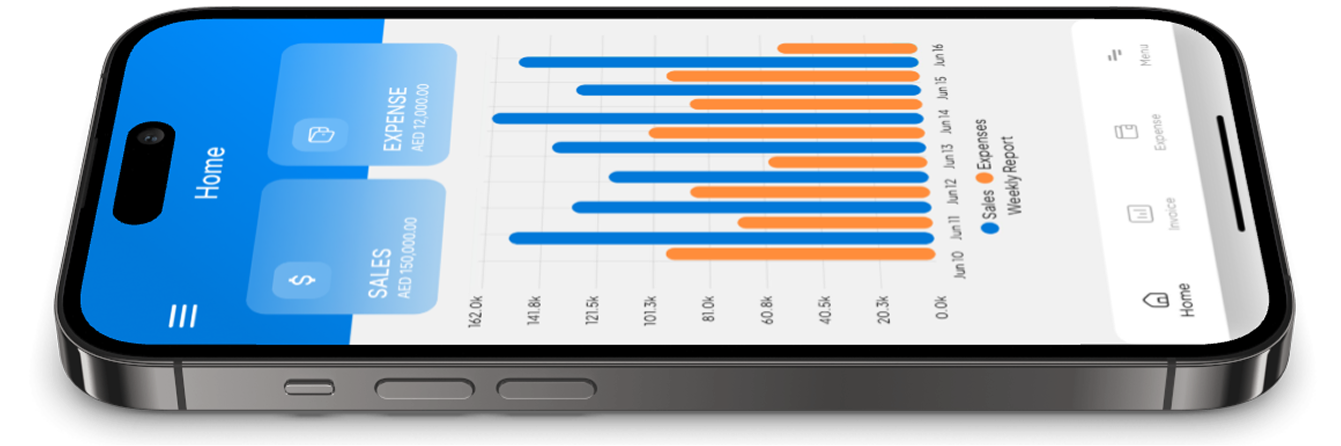
This is where BookBI’s new UAE e-invoicing feature comes in. With nationwide e-invoicing mandates approaching, BookBI is built to help your business stay ahead of the curve. You can generate, send and manage compliant electronic invoices in one place, with zero guesswork about format or process.
In practice, that means the invoicing work you already do in BookBI, such as creating invoices, sending them and keeping track of what has been paid, is ready for the new rules. You don’t need to learn a technical standard or juggle separate tools. Less admin, more time running your business. Our goal is to make accounting and e-invoicing simple, accessible, and efficient for businesses of all sizes.
Frequently asked questions
What is UAE e-invoicing?
It is a national system in which invoices are issued as structured digital data and exchanged between businesses through Accredited Service Providers.
When does e-invoicing become mandatory in the UAE?
On 1 January 2027 for businesses with revenue above AED 50 million, and on 1 July 2027 for businesses below that threshold. Government entities follow on 1 October 2027.
Is a PDF invoice still acceptable?
A PDF alone is not a structured e-invoice. The system requires structured data in the UAE format.
Does e-invoicing apply to sales to consumers?
Not at the moment. B2C transactions are excluded until further notice.
Can I start before the deadline?
Yes. Voluntary participation opened on 1 July 2026, and it is a good way to test your setup.
Do I need an Accredited Service Provider?
Yes. Both the business issuing the invoice and the one receiving it must appoint one.
Final thoughts
E-invoicing is a bigger change in process than in effort. Businesses that start early, tidy their data and test their setup will find the switch easy. Those that wait may find themselves rushing near the deadline.
Know your phase, check your data, choose the right tools and use the voluntary period to practice. With BookBI’s UAE e-invoicing feature, you can take the guesswork out of the process and keep your focus on the business you built.
- The information provided is based on the UAE e-invoicing framework and is subject to updates by the Ministry of Finance and Federal Tax Authority. Businesses should refer to the latest official guidance for compliance requirements