For a long time, manual bookkeeping felt like a reasonable solution. It was familiar, easy to control, and did not require any major changes to the way financial data was handled. Spreadsheets, basic tools, and structured files gave the impression that everything was organized and under control. At a glance, nothing seemed broken.
However, that sense of stability was misleading. The problem with manual bookkeeping is not that it suddenly fails, but that it gradually becomes inefficient as the business grows. What once worked smoothly starts to introduce friction, and that friction is often difficult to notice at first.
When Small Issues Start Adding Up
The first signs were subtle. Tasks that used to take a few minutes began taking longer. Reports required more effort to compile. Finding specific transactions across multiple files became less straightforward. None of these issues were critical on their own, but together they started to affect the workflow.
Over time, patterns began to emerge. Data had to be entered repeatedly across different documents. Calculations needed to be checked more often to ensure accuracy. Reports were no longer instantly available and had to be assembled manually. Most importantly, financial visibility became delayed, which made timely decision-making more difficult.
Manual bookkeeping tends to work well in simple environments, but it does not scale efficiently. As the volume of data increases, the system becomes heavier and more dependent on constant attention.
The Hidden Cost of Manual Work
One of the most important realizations was that the main issue was not just about occasional errors. It was about how much time and effort were being spent on maintaining the system itself.
Manual bookkeeping requires continuous involvement. Every transaction must be recorded, categorized, and verified. This creates a situation where valuable time is spent maintaining data instead of using it to make decisions.
As a result, even basic financial questions become harder to answer quickly. Understanding the current cash position, identifying trends in expenses, or evaluating performance requires additional effort and time. By the time the information is ready, it may already be outdated.
This delay affects more than efficiency. It impacts the quality of decisions.
When Errors Become a Systemic Problem
Errors in manual bookkeeping are not unusual, but they tend to accumulate in a way that affects the entire system. A single missed entry or duplicated transaction may seem insignificant, but repeated over time, these issues reduce confidence in the data.
We began to notice that reports required verification before they could be trusted. Numbers had to be cross-checked, and discrepancies had to be resolved manually. This added another layer of work and made the process even more time-consuming.
At that point, bookkeeping was no longer supporting operations effectively. It was slowing them down.
Attempting to Optimize the Wrong Approach
The initial response was to improve the existing setup. More structured spreadsheets were created, templates were refined, and processes were tightened. While these changes brought some improvement, they did not address the core issue.
Manual bookkeeping, regardless of how well organized it is, depends on human input at every stage. That dependency cannot be eliminated through better structure alone.
This realization marked a turning point. The problem was not the way bookkeeping was being done. It was the fact that it was still manual.
Transitioning to a Digital System
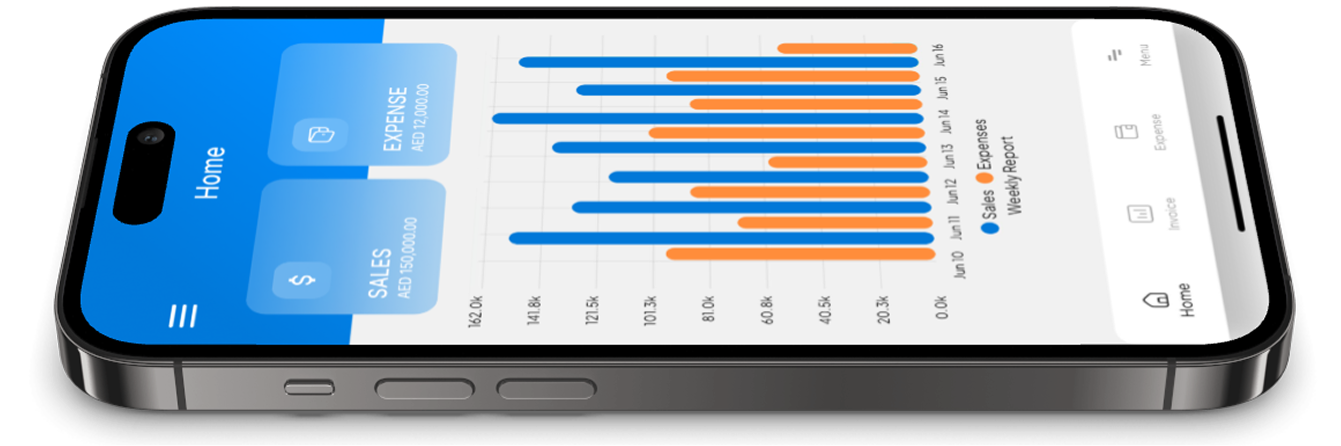
Exploring alternatives led us to Bookbi, a solution designed to automate bookkeeping processes and provide real-time financial tracking.
The difference was not just in efficiency, but in how the entire process was approached. Instead of treating bookkeeping as a task that requires constant attention, it became part of an automated system.
With Bookbi:
- Transactions are captured and categorized automatically
- Financial data is updated continuously
- Reports are generated without manual preparation
This removed the need for repetitive tasks and reduced the risk of human error.
A Shift in Focus
One of the most noticeable changes was the shift in how financial data was used. Instead of spending time verifying and maintaining records, the focus moved toward analyzing and understanding the data.
Real-time access to financial information made it easier to identify trends, monitor performance, and make informed decisions. The delay between action and insight was effectively removed.
This shift improved not only efficiency but also confidence in decision-making.
Practical Improvements
The impact of moving away from manual bookkeeping was clear in everyday operations.
Time spent on bookkeeping tasks decreased significantly. Errors became less frequent. Reports were readily available and did not require additional verification. Financial data became more reliable and easier to access.
More importantly, bookkeeping stopped being a separate task that required constant attention. It became integrated into the overall workflow.
Why Manual Bookkeeping Reaches Its Limits
Manual bookkeeping is not inherently flawed, but it is limited in its ability to handle complexity and growth. As operations expand, the effort required to maintain accuracy increases, and the system becomes less efficient.
Digital solutions address these limitations by automating repetitive tasks and providing continuous data updates. Tools like Bookbi are designed to support modern business needs, where speed and accuracy are essential.
This shift is not just about convenience. It reflects a broader change in how financial management is approached.
What Happened Next
After transitioning away from manual bookkeeping, the role of financial management changed. Time was no longer spent on maintaining records, but on using data to guide decisions.
Financial insights became more accessible. Issues were identified earlier. Decisions were made with greater confidence and accuracy.
The system no longer required constant supervision, which allowed more focus on core business activities.
Final Thought
Manual bookkeeping can work for a period of time, especially in simpler environments. However, as complexity increases, its limitations become more apparent.
Recognizing those limitations was an important step. Moving to a digital solution was not just an upgrade, but a necessary change.
What followed was a more efficient, reliable, and scalable approach to managing financial data.