Every entrepreneur eventually hits the exact same invisible wall.
You start out doing everything yourself. You are the head of sales, the chief marketing officer, the product manager, and worst of all, the exhausted clerk who spends Saturday mornings hunched over spreadsheets trying to reconcile bank statements. In the early days, this bootstrapping mentality is a badge of honor. You wear it proudly.
But as your revenue grows, your client list expands, and your vendor network multiplies, that badge turns into a bottleneck.
When you’re staring down a pile of faded receipts and a cash flow spreadsheet that simply won’t balance, the natural reflex is to think: I need to hire an accountant.
But do you really?
Adding headcount is one of the most expensive and permanent decisions a business owner can make. Between salaries, benefits, onboarding, and the sheer time it takes to manage another human being, hiring a full-time bookkeeper can severely dent the very profits you are trying to protect.
What if the solution isn’t adding more people to your payroll, but finally upgrading your systems? In today’s landscape, automation isn’t just a luxury for massive enterprise corporations. It is the lifeblood of agile, fast-growing businesses. You can put your entire financial back-office on autopilot, reclaiming dozens of hours a month without hiring a single staff member.
Here is exactly how you can make it happen.
The “Do-It-Yourself” Ceiling: Why Manual Finances Throttle Growth
Let’s talk about the hidden tax on your business: administrative drag.
Every single hour you spend manually typing data into a ledger is an hour you aren’t speaking with clients, refining your product, or closing deals. It’s what industry experts call “low-value work.” It has to be done, absolutely. But it doesn’t have to be done by you.
Manual accounting is also incredibly fragile. Human beings get tired. We transpose numbers, we accidentally double-count expenses, and we completely forget to log that client lunch from three weeks ago. These tiny, seemingly harmless errors compound over the course of a year. By the time tax season rolls around, you’re left in a panic, paying a CPA a premium just to untangle the mess.
Furthermore, DIY bookkeeping means your financial data is always looking backward. You’re reviewing last month’s performance instead of making real-time decisions based on today’s cash flow. If you want to scale, you need to shatter the DIY ceiling.
The Rise of the “Self-Operating” AI Accountant
A few years ago, “automating” your finances meant connecting a bank feed to a clunky piece of cloud software and still having to manually approve hundreds of transactions. It was a step up from a physical paper ledger, sure, but it still required a human operator staring at a screen.
The game has completely changed.
The industry standard has shifted from “software that helps you do accounting” to “software that does the accounting for you.” This is the era of artificial intelligence in finance. AI doesn’t just scrape raw data; it actually understands context. It knows the difference between a recurring software subscription and an office supply purchase, and it categorizes them accordingly using standard accounting principles.
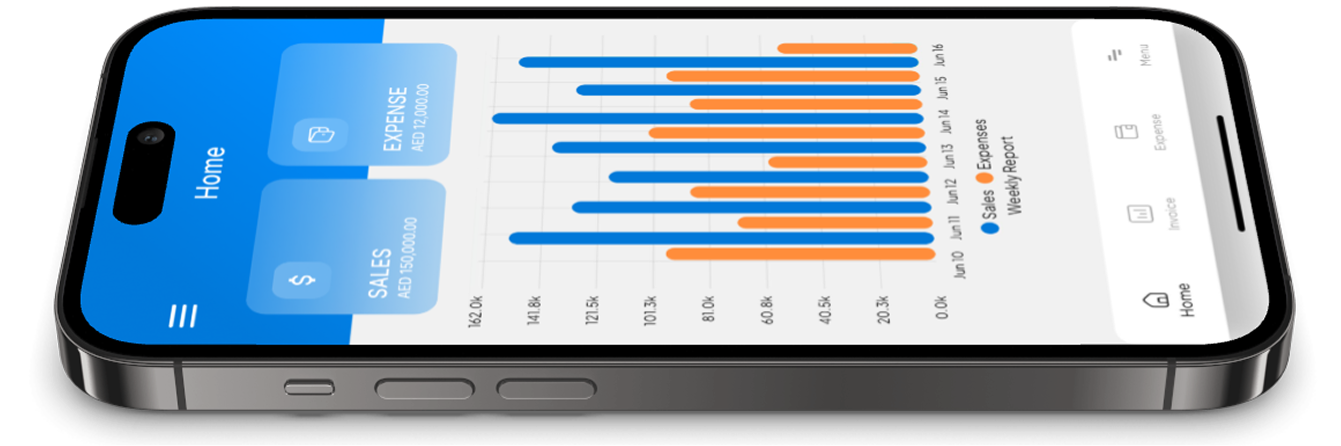
For example, platforms like BookBI have revolutionized the market by acting as the world’s first AI accountant, right in your pocket. Instead of hiring a junior clerk to process paperwork, modern founders are leveraging AI to automate up to 80% of traditional bookkeeping tasks. This shift isn’t just about saving time; it’s about eliminating the friction between a transaction happening and it being recorded perfectly on your balance sheet.
4 Core Areas to Automate Immediately
If you want to strip the manual labor out of your operations, you don’t need a massive overhaul. You just need to automate these four foundational pillars.
1. Expense Tracking (The Death of the Shoebox)
The days of stuffing physical receipts into a shoebox, wallet, or the glovebox of your car are officially over. Missing receipts and supporting documents can make it harder to substantiate business expenses and tax claims.
Automating this process means capturing the data the exact second the expense occurs. You need a system with powerful Optical Character Recognition (OCR) and intelligent extraction.
The Fix: Equip yourself with a smart accounting app. With BookBI, you simply snap a photo of a receipt while you’re still standing at the cash register. The app’s built-in AI instantly extracts the vendor, date, amount, and tax details, categorizes the expense, and creates the journal entry. You can also upload digital invoices directly to the app. Zero data entry required. Your expense is logged, and the physical receipt goes straight into the recycling bin.
2. Invoicing and Accounts Receivable
Cash flow is the oxygen of your business. If you are manually designing invoices in a word processor, exporting them as PDFs, and writing custom emails to clients, you are delaying your own paydays. Worse, chasing down late payments manually is awkward and can damage delicate client relationships.
The Fix: Your invoicing should take seconds, not minutes. An automated system lets you select a saved client profile, pick a service, and generate a fully compliant invoice almost instantly. In fact, BookBI users routinely create and send VAT/GST-compliant invoices in as little as 11 seconds. By removing the friction from generating invoices, you drastically decrease your days sales outstanding (DSO) and get cash into your account faster.
3. Categorization and Double-Entry Bookkeeping
This is where traditional business owners spend the bulk of their administrative time: agonizing over which bucket a transaction belongs to and trying to ensure the books actually balance. It requires an understanding of accounting theory that most founders simply don’t have time to learn.
The Fix: Let AI handle the ledger. When a transaction occurs, advanced AI accounting platforms automatically apply double-entry bookkeeping rules. They update your Trial Balance, Profit & Loss Statement, and Balance Sheet simultaneously in the background. BookBI’s automated categorization even detects duplicate expenses and ensures every dirham, dollar, or euro is routed to the correct account in your full accounting tree. You get professional-grade bookkeeping without taking a single accounting class.
4. Tax Compliance and Audit Readiness
Tax season is universally dreaded because it usually requires weeks of chaotic prep work. If you operate in a region with strict tax authorities like the UAE with its Federal Tax Authority (FTA) rules on VAT and Corporate Tax, non-compliance isn’t just an annoyance; it’s a massive financial liability.
The Fix: BookBI helps make tax preparation easier by keeping your income, expenses, tax amounts, and supporting documents organized throughout the year. As invoices and expenses are recorded, BookBI helps you track the relevant tax amounts and maintain clear financial records, making it easier to prepare VAT and Corporate Tax calculations when required. Instead of spending days gathering scattered information at filing time, you have organized accounting data readily available for preparing your tax returns.
The Math: Automating vs. Hiring
Let’s be ruthlessly logical and break down the actual numbers.
Depending on your location, hiring a full-time, qualified accountant or bookkeeper is a major, ongoing investment. In the UAE, for example, a full-time accountant typically earns between AED 7,000 and AED 15,000 per month. That translates to anywhere from AED 84,000 to AED 180,000 annually.
Compare that to an AI accounting subscription, which costs only a fraction of hiring a full-time employee. By leveraging an app like BookBI, businesses can automate many repetitive bookkeeping and accounting tasks, reduce manual data entry, and save valuable time and operational costs. Instead of increasing headcount as transaction volumes grow, automation allows your finance processes to scale more efficiently with your business.
And the savings go beyond base salary. You are eliminating the costs of human error, sick days, desk space, and the time you spend managing them. More importantly, an AI accountant is always on. It works weekends, holidays, and at 2:00 AM on a Tuesday, ensuring your live dashboard and net position are accurate to the minute.
How to Transition to an Automated System
Making the switch from manual spreadsheets to an AI-powered ecosystem might feel daunting, but it is a surprisingly straightforward process if you tackle it systematically.
1. Draw a Line in the Sand: Pick a clear start date. The beginning of a new month or a new financial quarter is the perfect, clean milestone to make the switch.
2. Centralize Your Operations: Move everything into one hub. Instead of using one app for invoicing, another for tracking receipts, and a messy spreadsheet for your ledger, adopt an all-in-one platform to manage clients, suppliers, and documents in a single place.
3. Scan and Store: Dedicate just one hour to uploading your existing business licenses, vendor lists, and active client details into your new system. Let the AI scan and autofill your data to set up your profiles instantly.
4. Trust the Process: In the first few weeks, you might feel the urge to double-check every automated entry. That’s normal. But as you see the AI flawlessly categorizing your expenses and managing your ledger, let go of the reins.
The Bottom Line: Buy Back Your Time
Your business is supposed to give you freedom, not tie you to a desk playing the role of a data-entry clerk. While hiring human staff is absolutely necessary for scaling certain parts of your company like sales, customer service, or creative production, your financial back-office no longer requires a human assembly line.
By embracing AI and automation, you gain absolute clarity over your cash flow, bulletproof your tax compliance, and most importantly, you buy back your time.
Are you ready to stop working in your business and start working on it?
It’s time to fire your spreadsheets and hire an AI.
Experience the world’s first AI accountant. Download the BookBI app today for iOS or Android, and put your business finances on autopilot.