For most small businesses, bookkeeping doesn’t fail because of bad intentions. It fails because of time.
Receipts pile up in WhatsApp chats. Supplier invoices arrive by email. Taxi slips get folded into wallets. Subscription payments appear in bank statements weeks later. At some point, someone has to sit down and manually enter all of it.
That “someone” is usually the founder.
Manual data entry feels harmless at first. Five minutes here. Ten minutes there. But over a month, it turns into hours of repetitive typing, and that’s before we even talk about mistakes.
The real issue isn’t that manual entry is annoying. It’s that it’s expensive. This is why many founders eventually look for an expense tracking app instead of relying on spreadsheets and manual processes.
The Hidden Cost of Typing Everything Manually
Every invoice entered by hand creates three risks:
- Time loss
- Human error
- Incomplete records
Time loss is obvious. If you process 15–20 expenses per day and each one takes 2–3 minutes to enter, categorize, and double-check, that’s easily 10–15 hours per month. For a founder or operations manager, those are hours that could be spent closing deals, managing staff, or improving the product.
Human error is more dangerous. One misplaced decimal. One extra zero. A VAT amount entered incorrectly. A duplicated entry because you forgot you already recorded it. Small mistakes compound, especially when reports are generated from that data.
Incomplete records are the silent problem. When entry is manual, it depends on discipline. If you’re tired, traveling, or simply busy, you postpone it. And postponed entries become forgotten expenses. Forgotten expenses mean inaccurate profit numbers.
Many businesses think they have a revenue problem. Often, they have a recording problem, and the right app helps eliminate that gap.
Why Spreadsheets Make It Worse
Spreadsheets look clean. They feel controlled. But they rely entirely on manual input.
They don’t collect data for you. They don’t read receipts. They don’t recognize supplier names automatically. Every field must be typed.
The moment transaction volume increases, spreadsheets stop being a solution and start becoming friction.
You end up maintaining the system instead of running the business.
This is where an expense tracking app becomes more practical than a spreadsheet.
The Shift Toward Automation
Modern businesses are not struggling because they lack tools. They are struggling because they are using tools that depend on manual effort.
Automation changes that dynamic.
Instead of:
- Opening an invoice
- Copying numbers
- Pasting into a sheet
- Categorizing manually
- Double-checking totals
You capture the document, and the system handles the rest.
That is the core value of a modern expense tracking app.
How BookBI Simplifies Expense Tracking
BookBI is built around a simple idea: founders shouldn’t spend their evenings typing numbers.
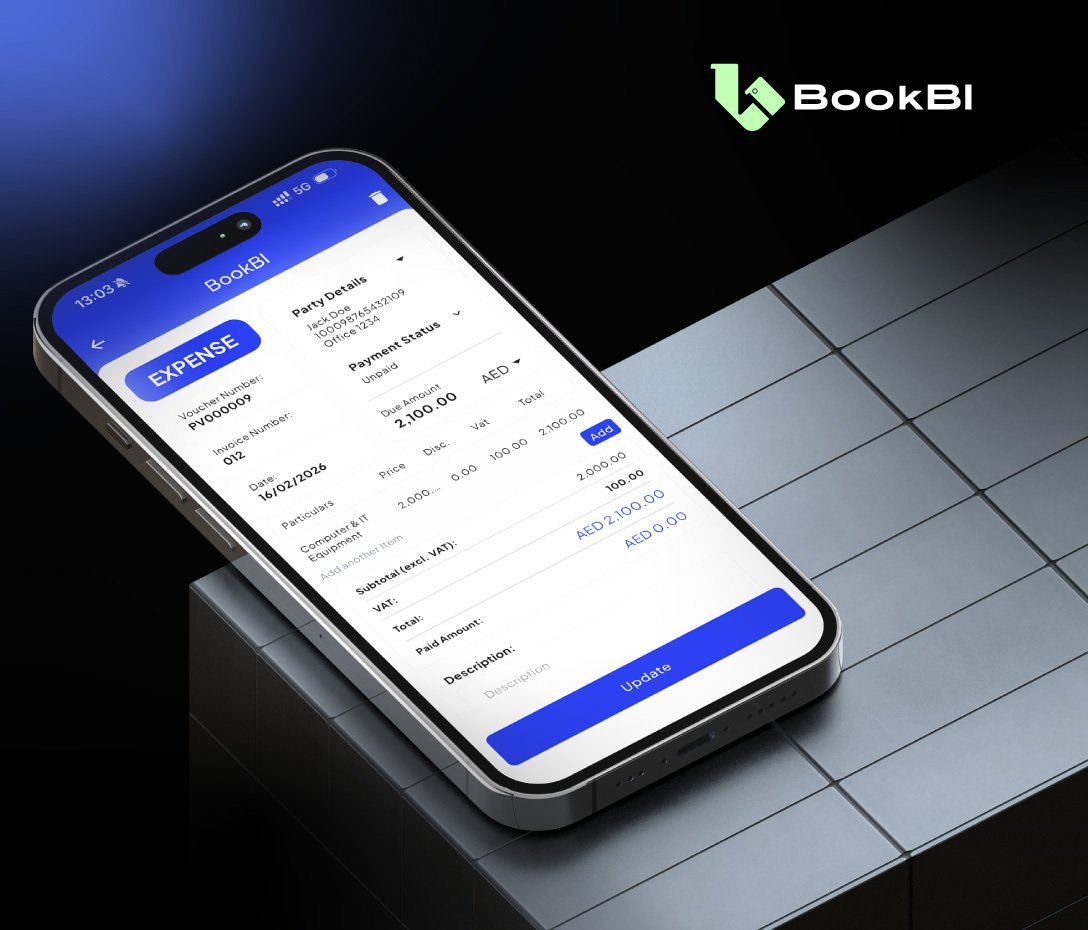
As an AI-powered expense tracking app, it allows users to take a photo of a receipt or upload an invoice. The system reads:
- Vendor name
- Date
- Amount
- VAT, if applicable
- Currency
- Line items, where available
The data is automatically structured and entered into the system.
No copy-paste.
No rechecking decimals.
No late-night spreadsheet sessions.
Just snap and go.
Accuracy Improves When Humans Type Less
Removing repetitive manual entry often increases accuracy.
AI doesn’t get tired at 11:30 PM.
It doesn’t rush because it has another meeting.
It doesn’t duplicate entries by accident.
A structured expense tracking app standardizes data automatically. Reports become cleaner. Categories stay consistent. VAT calculations are clearer.
This means:
- More reliable expense tracking
- Clearer monthly summaries
- Better VAT visibility
- Faster end-of-month closing
Manual entry creates risk. Automation reduces it.
Scaling Without Administrative Overload
As businesses grow, transaction volume increases.
More suppliers.
More subscriptions.
More payments.
More invoices.
If your system is manual, growth increases administrative burden.
Instead of hiring more support or spending additional founder time, an expense tracking app absorbs the growth and keeps records structured without multiplying effort.
The Bottom Line
Manual data entry feels small. But over time, it drains energy, introduces mistakes, and slows growth.
You don’t need a better spreadsheet.
You need fewer manual steps and smarter automation.
With tools like BookBI, bookkeeping becomes simple, fast, and reliable.
Snap the receipt.
Let the system do the rest.